Stack is a fundamental data structure which is used to store elements in a linear fashion. Stack follows LIFO (last in, first out) order or approach in which the operations are performed. This means that the element which was added last to the stack will be the first element to be removed from the stack
Today's topics:
Topic 1:
Stack implementation using array.
C++ Program to Implement Stack using array.
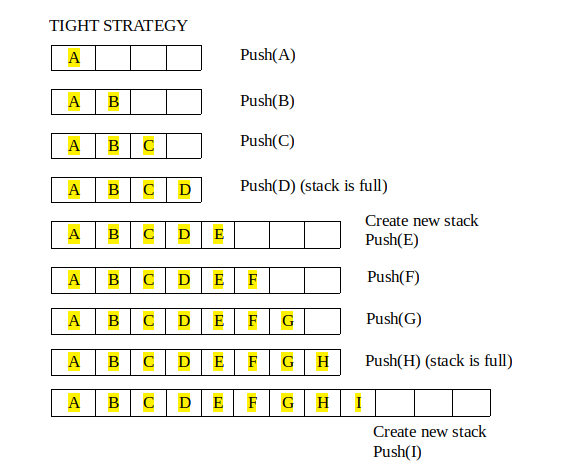
- Push - This adds a data value to the top of the stack.
- Pop - This removes the data value on top of the stack.
- Peek - This returns the top data value of the stack.
Code:
    #include < bits/stdc++.h>
    using namespace std;

    class myStack
    {
    public:
      vector v;
      void push(int val)
      {
        v.push_back(val);
      }
      void pop()
      {
        v.pop_back();
      }
      int top()
      {
        return v.back();
      }
      int size()
      {
        return v.size();
      }
      bool empty()
      {
        if (v.size() == 0)
          return true;
        else
          return false;
      }
    };

    int main()
    {
      myStack st;
      int n;
      cin >> n;
      for (int i = 0; i < n; i++)
      {
        int x;
        cin >> x;
        st.push(x);
      }
      while (st.empty() == false)
      {
        cout << st.top() << " ";
        st.pop();
      }

      return 0;
    }
Topic: 2
Stack using linked list
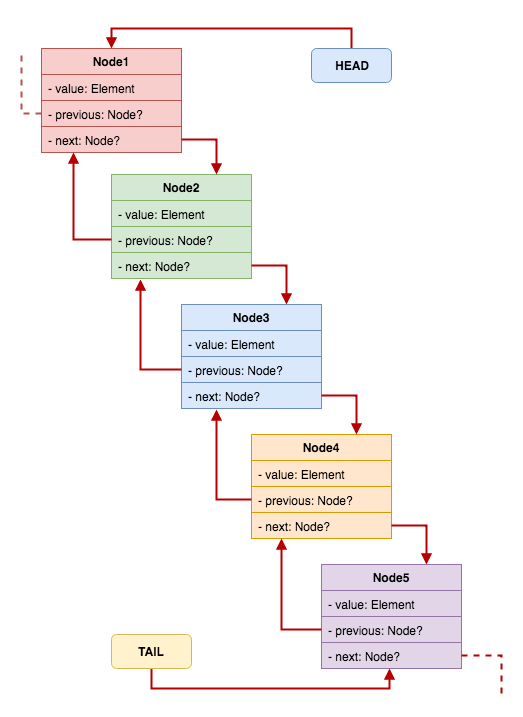
Assign top and start as the new node. Otherwise, take a new node, add data to it and assign the “previous” pointer of the new node to the “top” node earlier and next as “null”. Further, update the “top” pointer to hold the value of the new node as that will be the top element of the stack now.
Code:
    #include < bits/stdc++.h>
    using namespace std;

    class Node
    {
    public:
      int val;
      Node *next;
      Node *prev;
      Node(int val)
      {
        this->val = val;
        this->next = NULL;
        this->prev = NULL;
      }
    };

    class myStack
    {
    public:
      Node *head = NULL;
      Node *tail = NULL;
      int sz = 0;
      void push(int val)
      {
        sz++;
        Node *newNode = new Node(val);
        if (head == NULL)
        {
          head = newNode;
          tail = newNode;
          return;
        }
        newNode->prev = tail;
        tail->next = newNode;
        tail = tail->next;
      }

      void pop()
      {
        sz--;
        Node *deleteNode = tail;
        tail = tail->prev;
        if (tail == NULL)
        {
          head = NULL;
        }
        else
        {
          tail->next = NULL;
        }

        delete deleteNode;
      }

      int top()
      {
        return tail->val;
      }

      int size()
      {
        return sz;
      }

      bool empty()
      {
        if (sz == 0)
          return true;
        else
          return false;
      }
    };

    int main()
    {
      myStack st;
      // st.pop();
      // cout << st.top() << endl;

      int n;
      cin >> n;
      for (int i = 0; i < n; i++)
      {
        int x;
        cin >> x;
        st.push(x);
      }
      while (!st.empty())
      {
        cout << st.top() << endl;
        st.pop();
      }

      return 0;
    }
Topic: 3
Stack using list
Solution:
    #include < bits/stdc++.h>
    using namespace std;

    class myStack
    {
    public:
      list l;
      void push(int val)
      {
        l.push_back(val);
      }
      void pop()
      {
        l.pop_back();
      }
      int top()
      {
        return l.back();
      }
      int size()
      {
        return l.size();
      }
      bool empty()
      {
        if (l.size() == 0)
          return true;
        else
          return false;
      }
    };

    int main()
    {
      myStack st;
      int n;
      cin >> n;
      for (int i = 0; i < n; i++)
      {
        int x;
        cin >> x;
        st.push(x);
      }
      while (!st.empty())
      {
        cout << st.top() << endl;
        st.pop();
      }

      return 0;
    }
Probelm: 4
STL stack
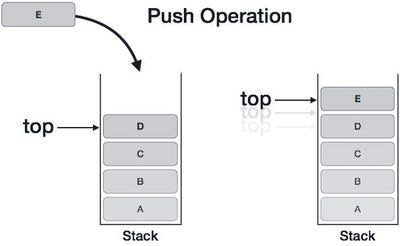
Stacks are a type of container adaptors with LIFO(Last In First Out) type of working, where a new element is added at one end (top) and an element is removed from that end only.
Solution:
    #include < bits/stdc++.h>
    using namespace std;

    int main()
    {
      stack st;
      int n;
      cin >> n;
      // for (int i = 0; i < n; i++)
      while (n--)
      {
        int x;
        cin >> x;
        st.push(x);
      }
      while (!st.empty())
      {
        cout << st.top() << " ";
        st.pop();
      }

      return 0;
    }
Github link here
A queue is an abstract data structure that contains a collection of elements. Queue implements the FIFO mechanism i.e. the element that is inserted first is also deleted first. In other words, the least recently added element is removed first in a queue.
Today's topics:
- Queue using Singly linked list
- Queue using Doubly linked list
- Queue using List
- Queue using STL
- Queue using Stack - Leetcode
- Stack using Queue - Leetcode
Topic 1: Queue using Singly linked list
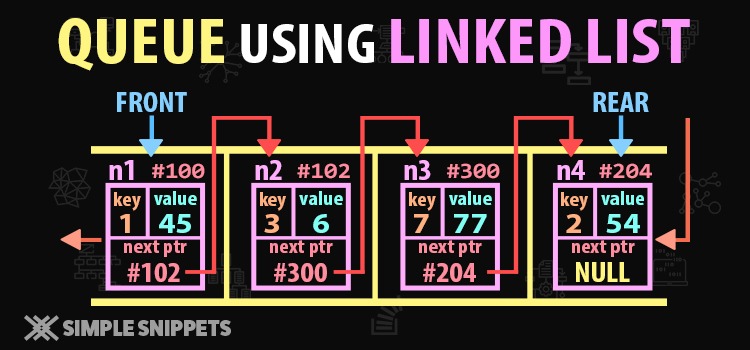
A queue is a linear data structure that follows the First in, First out principle(FIFO). Queue supports operations like enqueue and dequeue. It can be implemented using an array and linked list.
Solution:
        #include < bits/stdc++.h>
        using namespace std;

        class Node
        {
        public:
          int val;
          Node *next;
          Node(int val)
          {
            this->val = val;
            this->next = NULL;
          }
        };

        class myQueue
        {
        public:
          Node *head = NULL;
          Node *tail = NULL;
          int sz = 0;

          void push(int val)
          {
            sz++;
            Node *newNode = new Node(val);
            if (head == NULL)
            {
              head = newNode;
              tail = newNode;
              return;
            }
            tail->next = newNode;
            tail = tail->next;
          }

          void pop()
          {
            sz--;
            Node *deleteNode = head;
            head = head->next;
            delete deleteNode;

            if (head == NULL)
            {
              tail = NULL;
            }
          }

          int front()
          {
            return head->val;
          }

          int size()
          {
            return sz;
          }

          bool empty()
          {
            if (sz == 0)
              return true;
            else
              return false;
          }
        };

        int main()
        {
          myQueue q;
          int n;
          cin >> n;
          while (n--)
          {
            int x;
            cin >> x;
            q.push(x);
          }

          while (!q.empty())
          {
            cout << q.front() << endl;
            q.pop();
          }

          return 0;
        }
Topic 2: Queue using Doubly linked list
Using a doubly linked list for implementing a queue provides several advantages. It allows for efficient insertion and removal of elements at both ends of the list, making enqueue and dequeue operations constant time.
Code:
          #include < bits/stdc++.h>
          using namespace std;

          class myQueue
          {
          public:
            list l;

            void push(int val)
            {
              l.push_back(val);
            }

            void pop()
            {
              l.pop_front();
            }

            int front()
            {
              return l.front();
            }

            int size()
            {
              return l.size();
            }

            bool empty()
            {
              return l.empty();
            }
          };

          int main()
          {
            myQueue q;
            int n;
            cin >> n;

            while (n--)
            {
              int x;
              cin >> x;
              q.push(x);
            }

            while (!q.empty())
            {
              cout << q.front() << " ";
              q.pop();
            }

            if (!q.empty())
            {
              cout << q.front();
            }

            return 0;
          }
Topic 3 : Queue using List
Code:
                      #include < bits/stdc++.h>
                      using namespace std;

                      class myQueue
                      {
                      public:
                        list l;

                        void push(int val)
                        {
                          l.push_back(val);
                        }

                        void pop()
                        {
                          l.pop_front();
                        }

                        int front()
                        {
                          return l.front();
                        }

                        int size()
                        {
                          return l.size();
                        }

                        bool empty()
                        {
                          return l.empty();
                        }
                      };

                      int main()
                      {
                        myQueue q;
                        int n;
                        cin >> n;

                        while (n--)
                        {
                          int x;
                          cin >> x;
                          q.push(x);
                        }

                        while (!q.empty())
                        {
                          cout << q.front() << " ";
                          q.pop();
                        }

                        if (!q.empty())
                        {
                          cout << q.front();
                        }

                        return 0;
                      }
Topic 4: Queue using STL
Code:
                    #include < bits/stdc++.h>
                    using namespace std;

                    int main()
                    {
                      queue q;
                      int n;
                      cin >> n;

                      while (n--)
                      {
                        int x;
                        cin >> x;
                        q.push(x);
                      }

                      cout << q.size() << endl;
                      while (!q.empty())
                      {
                        cout << q.front() << " ";
                        q.pop();
                      }

                      return 0;
                    }
Topic 5: Queue using Stack - Leetcode
leetcode link here
Code:
          class MyQueue
          {
          public:
            stack st;
            MyQueue()
            {
            }

            void push(int x)
            {
              st.push(x);
            }

            int pop()
            {
              stack newSt;
              int last;
              while (!st.empty())
              {
                int k = st.top();
                st.pop();
                if (st.empty())
                {
                  // last element
                  last = k;
                  break;
                }
                newSt.push(k);
              }

              while (!newSt.empty())
              {
                st.push(newSt.top());
                newSt.pop();
              }

              return last;
            }

            int peek()
            {
              stack newSt;
              int last;

              while (!st.empty())
              {
                int k = st.top();
                st.pop();
                if (st.empty())
                {
                  // last element
                  last = k;
                }
                newSt.push(k);
              }

              while (!newSt.empty())
              {
                st.push(newSt.top());
                newSt.pop();
              }

              return last;
            }

            bool empty()
            {
              return st.empty();
            }
          };

          /**
            * Your MyQueue object will be instantiated
               and called as such:
            * MyQueue* obj = new MyQueue();
            * obj->push(x);
            * int param_2 = obj->pop();
            * int param_3 = obj->peek();
            * bool param_4 = obj->empty();
            */
Topic 6: Stack using Queue - Leetcode
Leetcode link here
Solution:
              class MyStack
              {
              public:
                queue q;
                MyStack()
                {
                }

                void push(int x)
                {
                  q.push(x);
                }

                int pop()
                {
                  queue newQ;
                  int last;

                  while (!q.empty())
                  {
                    int k = q.front();
                    q.pop();
                    if (q.empty())
                    {
                      // last element
                      last = k;
                      break;
                    }
                    newQ.push(k);
                  }

                  q = newQ;

                  return last;
                }

                int top()
                {
                  queue newQ;
                  int last;
                  while (!q.empty())
                  {
                    int k = q.front();
                    q.pop();
                    if (q.empty())
                    {
                      // last element
                      last = k;
                    }
                    newQ.push(k);
                  }
                  q = newQ;

                  return last;
                }

                bool empty()
                {
                  return q.empty();
                }
              };

              /**
                * Your MyStack object will be instantiated and called as such:
                * MyStack* obj = new MyStack();
                * obj->push(x);
                * int param_2 = obj->pop();
                * int param_3 = obj->top();
                * bool param_4 = obj->empty();
                */
Github link here
Click to the below link and complete the assignment. Don't see the solution before!
Click here to go the assignment
Problem: 1
  Problem Statement

  Welcome to the "Panta Vat" assignment.
  In this task you just need to print
  the following lines as it is.

  Hello, world! I am learning C programming language. ^_^

  Programming is fun and challenging. /\/\/\

  I want to give my 100% dedication to learn!
  I will succeed one day.
  Note: Here you will see 4 spaces in the last
  line which is a tab, you need to print a tab there.

  Input Format

  There is no input
  Output Format

  Output the lines.
  Sample Output 0

  Hello, world! I am learning C programming language. ^_^
  Programming is fun and challenging. /\/\/\
  I want to give my 100% dedication to learn!    I will succeed one day.
Solution:
  #include< stdio.h>

    int main()
    {
        printf("Hello, world! I am learning C programming
         language. ^_^\nProgramming is fun and
          challenging. /\\/\\/\\\nI want to give
           my 100%% dedication to learn!\tI will
            succeed one day.");

        return 0;
    }
Problem: 2
  Problem Statement

  You will be given two integers A and B.
   You need to give output their multiplication.

  Input Format

  Input will contain A and B
  Constraints

  -10^9 <= A,B <= 10^9
  Output Format

  Output the multiplication
  Sample Input 0
  10 50

  Sample Output 0
  500

  Sample Input 1
  10000000 10000000

  Sample Output 1
  100000000000000

  Sample Input 2
  -100 62

  Sample Output 2
  -6200
Solution:
  #include< stdio.h>

  int main()
  {
      long long a,b;
      scanf("%lld %lld",&a,&b);
      long long sum = a*b;
      printf("%lld", sum);

      return 0;
  }
Problem: 3
  Problem Statement

  You will be given a non-negative integer N,
  you need to tell if this number is divisible
  by 3 or not. If it is divisible by 3 output
  "YES" otherwise output "NO" without the quotation mark.

  Input Format

  Input will contain N.
  Constraints

  0 <= N <= 10^9
  Output Format

  Output "YES" or "NO" without the quotation mark according to the question.

  Sample Input 0
  33

  Sample Output 0
  YES

  Sample Input 1
  29

  Sample Output 1
  NO

  Sample Input 2
  0

  Sample Output 2
  YES
Solution:
  #include< stdio.h>

  int main()
  {
      int a;
      scanf("%d",&a);
      if(a%3==0)
      {
          printf("YES");
      }
      else
      {
          printf("NO");
      }


      return 0;
  }
Problem: 4
  Problem Statement

  You will be given a non-negative integer
   N, you need to print all numbers from 1
    to N that are divisible by both 3 and 7.

  Input Format

  Input will contain N.
  Constraints

  21 <= N <= 10000
  Output Format

  Output all numbers from 1 to N that are
  divisible by both 3 and 7. Don't forget
  to print a new line after every number.

  Sample Input 0
  30

  Sample Output 0
  21

  Sample Input 1
  50

  Sample Output 1
  21
  42

  Sample Input 2
  100

  Sample Output 2
  21
  42
  63
  84
Solution:
  #include< stdio.h>

  int main()
  {
      int a;
      scanf("%d",&a);
      for (int i = 1; i <= a; i++)
      {
          if(i%3==0 && i%7==0)
          {
              printf("%d\n",i);
          }
      }

      return 0;
  }
Problem: 5
  Problem Statement

  Alisa and you have gone out for shopping,
  and Alisa wants to buy a new pair of shoes
  for Eid. She has enough money to buy
  anything. However, Alisa will only buy
  shoes if you also buy a pair. And you
  will buy a pair of shoes if you can buy
  a Punjabi. That means, everything is
  depending on the Punjabi.

  You have decided that you will buy a
  Punjabi only if you have more than
  1000 Taka. After purchasing the Punjabi
  the amount of your money will be
  reduced by 1000. Suppose you have
  1600 taka with you, after buying the
  Punjabi you will have 600 taka left with you.

  Then you will only buy shoes if you have
  500 Taka or more left with you. That
  means, if you can't buy your Punjabi
  you can't buy shoes.

  Now if I inform you the amount N Taka
  that your mother will give you, can
  you tell me what will happen next?

  If you buy a punjabi print "I will buy Punjabi".

  If you buy a pair of shoes print "I will buy new shoes"

  If Alisa buy a pair of shoes print "Alisa will buy new shoes"

  If no one can buy anything print "Bad luck!"

  Note: Don't forget to print new line after every line you print.

  Input Format

  Input will contain a non-negative integer N.
  Constraints

  1 <= N <= 2^31
  Output Format

  Output the events that will happen as asked in the question.
  Sample Input 0

  1000
  Sample Output 0

  Bad luck!
  Sample Input 1

  1450
  Sample Output 1

  I will buy Punjabi
  Sample Input 2

  1500
  Sample Output 2

  I will buy Punjabi
  I will buy new shoes
  Alisa will buy new shoes
Solution:
  #include< stdio.h>

  int main()
  {
    int a;
    scanf("%d",&a);

    if(a<1001)
    {
        printf("Bad luck!");
    }
    else if(a>=1500)
    {
        printf("I will buy Punjabi\nI will buy new shoes\nAlisa will buy new shoes\n");
    }
    else
    {
        printf("I will buy Punjabi");
    }

    return 0;
  }